 Lexorant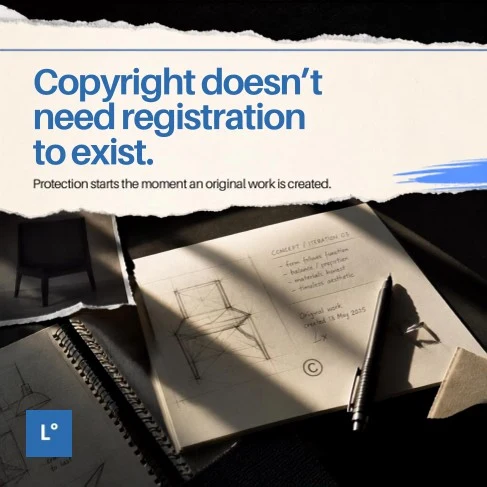
Lexorant’s copyright-awareness post questions the belief that protection begins only after registration. WIPO explains that, in most countries, copyright protection arises automatically without registration formalities. Voluntary registration can still have a useful role, including in disputes about creation or ownership.
That distinction helps creators separate two questions: whether a work is protected and what information they can produce when its history is questioned. Copyright concerns the expression of a work rather than an underlying idea alone. Keeping records is therefore a practical part of managing creative work, even when a registration step is not required for protection.
Build a creation record as you work
Imagine a small education business developing a course. A trainer writes the script, a designer prepares illustrations and an editor produces the final video. Six months later, a team member asks who created a particular diagram and what permission the business has to reuse it in another programme.
A tidy project folder can make that question easier to answer. It might contain dated drafts, contributor details, the agreed scope of work and the final approved files. These records do not replace a legal assessment. They help the business give its adviser a clearer factual picture when one is needed.
Keep permission separate from possession
Having a file on a shared drive is an operational fact. The permission to use that file is a separate question. For a learning exercise, ask a team to choose three assets from a recent project and identify the supporting document for each: an original creation record, an agreement or a licence.
Where a record is missing, note the question rather than guessing an answer. Who supplied the asset? What use was intended? Was a third-party element included? This simple exercise is often more useful than creating a large policy that nobody applies to everyday work.
Make good habits easy to repeat
Use a consistent naming convention, a designated place for approvals and a short handover checklist. Ask contributors to identify outside materials when they submit their work, while the details are still fresh. A clear workflow makes it easier for future colleagues to understand what they are looking at.
Automatic protection should not be confused with automatic documentation. Creators can focus on making valuable work while also preserving the records that explain how it came into being. The strongest day-to-day habit is to keep that history alongside the finished product.