 Lexorant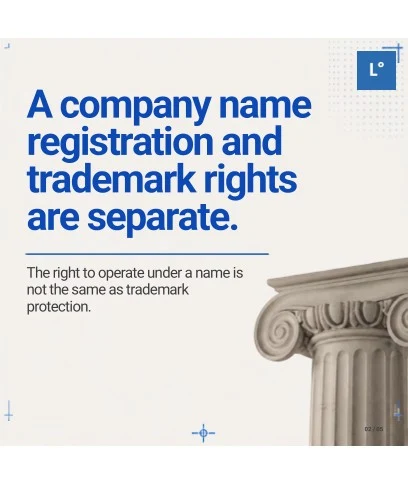
Lexorant’s post explores a costly founder assumption: treating the registration of a company name as if it completed the work of protecting a brand. Administrative registration and trademark questions are different considerations. A business can spend heavily on an identity before realizing it has not asked the right questions about that identity’s use.
The practical message is to put an informed brand review earlier in the commercial process. Naming, design, product planning and professional advice should have time to interact before packaging, advertising and customer recognition make a change much harder to manage.
Add a decision point before the launch budget
Picture a fictional founder preparing a new food brand. A designer has produced attractive packaging, a domain has been purchased and a social-media campaign is ready. The founder is about to approve the printing order. At this point, a naming concern would affect several teams and a committed budget.
Now move the review earlier. Before the packaging is finalized, the team prepares a short brand brief: the proposed name, the product category, the intended markets and the variations it expects to use. A professional reviewer receives a clearer question, and the commercial team has more room to respond to the findings.
Keep the creative and commercial brief connected
Brand choices are rarely made by one person. Founders, marketers, designers and advisers each see a different part of the problem. A shared brief helps them work from the same assumptions and makes it easier to explain why a proposed name was retained, changed or set aside.
For a workshop, ask participants to evaluate two invented brand briefs. One says only “check this name.” The other explains the product, audience and launch plan. Discuss what additional questions the reviewer would need to ask in each case. The exercise shows why a useful review starts with a useful instruction.
Preserve the decision history
Keep the brief, review correspondence and final decision in a place the team can find. When the business expands or introduces another product, revisit the relevant questions instead of assuming an earlier decision covers every new situation.
A strong brand is built through creative work and repeated commercial choices. Giving IP questions a place in that process can help the team make those choices with better information. The aim is not to remove every uncertainty; it is to avoid turning an unanswered question into an expensive commitment.